Essential cookies enable core functionality. The website cannot function properly without these cookies, and they can only be disabled by changing your browser preferences.
Advertisement cookies are used to provide visitors with relevant ads and marketing campaigns. These cookies track visitors across websites and collect information to provide customized ads.
Used to identify individual clients behind a shared IP address and apply security settings on a per-client basis.
By selecting “Accept all” you allow QualityHive and our partners to use cookies and to share your data for all these purposes.
We and our partners use cookies and similar tools to measure our site's audience, evaluate the performance of our ads, and show you personalized content and ads.
Except for cookies that are essential for navigating our site, we use these cookies and share your data only with your consent.
Automate client feedback with our MCP serverLearn more!
A website handover is done when the client controls everything the site depends on, knows how to edit it and knows who to call when it breaks. This checklist works through logins, ownership, DNS, hosting, licences, training, documentation and warranty, and ends with an email you can copy and send.
Plenty of agencies keep hosting under a care plan, and that works fine as long as the client can get everything back on request and that is written down.
Logins and access
☐ Create a named CMS admin account for the client on a company email address.
☐ Use a shared mailbox for account emails, such as [email protected], so access survives staff changes.
☐ Share credentials through a password manager or one-time link. Never in a plain email.
☐ Ask the client to change passwords and turn on two-factor login on day one.
☐ Check two-factor recovery codes and phone numbers belong to the client.
☐ Remove agency staff and freelancer accounts that are not needed after launch.
☐ Record every system in an access register: name, URL, owner and role.
Ownership
☐ Confirm the domain is registered to the client's legal entity, not a staff member or the agency.
☐ Confirm in writing who owns the design and code.
☐ Confirm any freelancer work was assigned to the agency first, so it can be passed on.
☐ Confirm image, video and font licences sit in the client's name and cover web use.
☐ Deliver final source files: design files, code and a database export.
Copyright is the one people forget. Under UK law the author is the first owner of a work unless an employee made it in the course of their job, so an agency or freelancer can own the code and design unless the contract says otherwise. An assignment has to be in writing and signed. If ownership matters, put it in the contract and get legal advice on the wording.
Domain and DNS
☐ Record the renewal date, turn on auto-renew and put billing on the client's card.
☐ Move the registrar login to the client, or push the domain to the client's own registrar account.
☐ Leave the transfer lock on once the move is done.
☐ Export the DNS zone and add it to the handover pack.
☐ List the email records (MX, SPF, DKIM and DMARC) and who manages email.
☐ Note any CDN or DNS proxy account and who owns it.
☐ Note how the SSL certificate renews and when.
For .uk domains, moving registrar currently means a registrar tag change. Nominet plans to replace that with Transfer Authorisation Codes on 9 February 2027, so check which process applies on the day.
Hosting
☐ Name the account owner and the bill payer.
☐ Note the server spec, PHP or runtime version and scheduled tasks.
☐ Note where backups go, how often they run and how long they are kept.
☐ Run a test restore and record the date.
☐ Send uptime alerts to an address the client monitors.
☐ Decide whether staging stays. If it stays, keep it password protected. If not, delete it.
Save countless hours on your projects
Raise tasks in under 3 seconds using our revolutionary widget
Licences and third-party accounts
☐ List every paid plugin, theme, font, stock library and API with its renewal date, cost and account owner.
☐ Move licences into the client's account where the licence allows it, and record any that cannot move.
☐ Move API keys into the client's accounts: maps, reCAPTCHA, payment gateway and transactional email.
☐ Make the client a verified owner in Search Console. If the agency is leaving, delete its verification token as well as its user, because a leftover token lets it verify again.
☐ Transfer Tag Manager and Google Ads access if you set them up.
Training
☐ Run a 60-minute session and record it.
☐ Have the client do the common jobs themselves: edit a page, publish a post, replace an image and find a form entry.
☐ Write short how-to notes for jobs they will only do occasionally.
☐ Tell them what to leave alone: theme files, plugin updates and DNS.
Documentation
Put these in one shared folder and send a single link.
☐ Access register
☐ Site overview: pages, templates, plugins and integrations
☐ Hosting and deployment notes
☐ Editor guide and training recording
☐ Known issues and anything moved to phase 2
☐ Signed UAT and acceptance documents
☐ Warranty terms and how to get support
Warranty
☐ Agree a start date, end date and length in writing. 30 days from launch is a common starting point for a marketing site.
☐ Define a defect: the site does not do what was signed off at UAT.
☐ Name one channel for reporting issues.
☐ State your response times.
☐ Say what ends cover, such as code edited by someone else.
Report
Covered?
Form stops sending
Yes
Layout breaks in an agreed browser
Yes
Broken link left over from the build
Yes
New page template
No, quote as a change
Copy changes after launch
No, client can edit
Breaks after client edits the code
No
A third-party service changes
Usually no
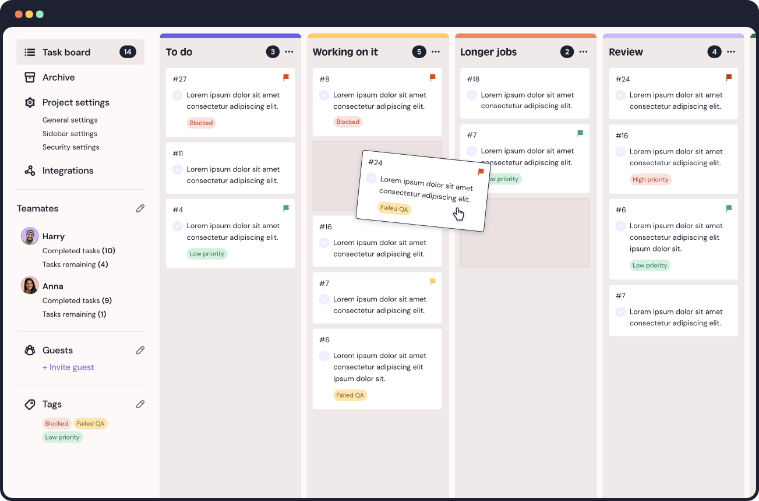
The single channel is what makes this workable. A QualityHive guest link lets the client click the problem on the page and describe it with no login or install, on the Lite plan and above, and the widget stays invisible to the public unless they have the link. Our page for agencies shows how that fits into a client project.
Copy-paste handover email
Send it the day the site goes live. If you need other messages for the same project, we have more website feedback email templates.
Subject: [Site name] is live: your handover detailsHi [first name],[Site name] is now live at [URL].Your handover pack is here: [link]. It lists every login, renewaldate and guide for the site.What's now yours:- Domain: registered to [company] at [registrar], renews [date]- Hosting: [provider], paid by [who]- Website admin: [admin URL], login shared via [password manager]- Analytics and Search Console: you're the owner on bothWhat we need from you by [date]:- Change your passwords and turn on two-factor login- Reply to confirm you're happy to sign off the handoverYour warranty runs until [date]. It covers anything that doesn'twork as signed off. Send issues to [channel] and we'll pick themup within [response time]. Anything new, like extra pages orfeatures, we'd quote separately.Your training recording is here: [link]Thanks,[Your name]
What usually goes wrong
The domain is in someone's personal account. When that person leaves, nobody can renew it. Check the registrant before launch.
Renewals fall on the agency's card. The card expires, a plugin licence lapses and a site quietly stops getting updates.
Alerts go to the wrong inbox. If uptime alerts go only to the agency after the contract ends, nobody sees them.
The client never practises. If they only watched the training, the first real edit turns into a support ticket.
Revolutionise your QA processes
FAQ
What should be included in a website handover?
Logins, domain and DNS control, hosting details, licences, training, documentation and written warranty terms. The test is whether the client could run the site if the agency disappeared tomorrow.
Who should own the domain name?
The client's business, as the registrant. An agency can manage it for them, but the client's legal entity should be the name on the record.
Does the client automatically own the website code?
Not automatically under UK law. Copyright usually starts with the author, so the contract needs to assign it, in writing and signed. Get legal advice on the exact wording.
How long should a website warranty last?
30 days is a common starting point for a marketing site, and longer for complex builds. Defining what counts as a defect matters more than the length.
Should the agency keep access after handover?
Only if there is a care plan or support agreement. Otherwise remove agency accounts once the warranty ends and record that you have done it.